John Taffin lived two long careers that were more closely related than they first appear. For decades he taught mathematics in Boise, a profession built on precision, demonstration and the patient transfer of knowledge. At the same time another classroom was forming around him: shooting benches, hunting camps, correspondence, gun shows, magazine pages and the expanding circle of readers who came to know the voice of a man they had never met.
When the schoolteacher eventually retired, the other classroom was already enormous. His family obituary says he began his firearms-writing career in the 1980s and ultimately produced more than 3,000 articles and 10 books. American Handgunner remembered him as one of the giants of the sixgun world and one of the most knowledgeable revolver authorities of his era. Those are large claims, but the surviving record makes the scale easier to understand: decades of articles, tests, handloading work, historical essays, books, correspondence and friendships, much of it created before the modern web learned how easily history could disappear.
This memorial exists because that history should not disappear. The restored Sixguns.com archive lets readers do something more valuable than read an obituary: they can still walk into Taffin’s old digital workshop and read what he left on the bench.
The teacher behind the byline
The firearms career came from a man who had already spent a lifetime explaining difficult things to other people.
According to his family obituary, John August Taffin was born May 2, 1939, in Barberton, Ohio. He earned a Bachelor of Education degree from Kent State University in 1965, moved his young family to Boise, Idaho, and taught mathematics at Hillside Junior High School until 1995. While teaching, he completed a master’s degree at the University of Montana in 1971.
That background matters. Taffin’s best technical writing does not read like a catalog of possessions. It reads like instruction. What is this sixgun trying to do? Why does this load behave this way? What did an earlier experimenter learn, and what mistake can the next shooter avoid? His subject was firearms, but his method was recognizably that of a teacher: experience turned into explanation.
In one later autobiographical GUNS Magazine essay, reflecting on life at 77, Taffin reduced what mattered most to four words: faith, family, friends and firearms. His colleagues would use nearly the same vocabulary when they remembered him after his death.
A life in sixguns
Firearms writing has always had room for specialists, but Taffin’s specialty was larger than a caliber or a brand. He treated the sixgun as a living historical line connecting frontier single actions, Smith & Wesson and Colt double actions, Elmer Keith’s experiments, Skeeter Skelton’s practical revolvers, modern custom guns, metallic silhouette, handgun hunting, handloading and the ordinary pleasure of an accurate revolver on a quiet afternoon.
GUNS Magazine’s final staff tribute remembered both the depth of his experience and his insistence on exact language. An editor recalled learning that a casual synonym was not always a synonym to Taffin: a sixgun was a sixgun, and he expected the word to mean something. The same tribute described a writer whose assignments routinely arrived overflowing with first-hand detail because he had spent decades accumulating experience that could not be compressed easily.
Dave Anderson, who shared a masthead with Taffin for nearly forty years, placed him in the tradition of influential firearms writers such as Townsend Whelen, Jack O’Connor, Elmer Keith and Skeeter Skelton. Anderson emphasized something beyond technical authority: Taffin wrote openly about enthusiasm, duty, honor, self-reliance, family and respect for the people who came before. That combination explains why readers often remember the man and the values at the same time they remember a load, a gun or a cartridge.
There are writers who document hardware, and there are writers who leave a culture legible to the next generation. Taffin did both.
The Perfect Packin’ Pistol — an idea that kept walking
Taffin coined and developed the phrase Perfect Packin’ Pistol, usually shortened by shooters to PPP. The point was not to crown one permanent winner. It was to think seriously about the balance between power, portability, accuracy, access and the circumstances in which a handgun would actually be carried.
The phrase outlived the article that introduced it. Other writers adopted it, readers debated their own versions, gunsmiths built toward it and manufacturers eventually produced tribute guns around the concept. In 2025 American Handgunner published a dedicated sixgun tribute honoring Taffin through a new PPP project. The persistence of the phrase is a useful measure of influence: an idea becomes part of a community when people keep using it after the author no longer has to explain where it came from.
The man his friends remember
The best memorial record is not a single institutional obituary. It is the overlap between people who saw the same man from different angles.
Jim Wilson remembers Taffin as a friend from the Shootist Holiday era, a man with whom he shared an affection for single-action revolvers, big-bore cartridges and the writing of Keith and Skelton. Wilson’s remembrance is built around friendships and a chain of commemorative .44 Specials created to honor Skeeter Skelton. In that story Taffin is not a distant celebrity; he is one of the men trying to make sure another gun writer’s memory remains tangible.
Roy Huntington and Brent Wheat devoted an episode of the GUNS Magazine Podcast to remembering Taffin through personal stories. GUNS Magazine assembled multiple colleagues for its written final tribute. American Handgunner published Dave Anderson’s remembrance after almost four decades of shared work. Read together, these sources repeatedly describe a gentleman, an enthusiast, a demanding craftsman, a generous correspondent and a man whose friendships were inseparable from the firearms culture he documented.
The overlap matters because no single tribute owns the story. Each one holds a piece of it, and this page deliberately sends readers outward to those original voices rather than copying their photographs or their prose.
The trail did not end in 2025
Memorials can become static very quickly. Taffin’s has not. The Elmer Keith Memorial Long Range Handgun Shoot in Idaho was renamed to include John Taffin, joining the names of two men whose work helped define serious long-range sixgunning for generations of readers. American Handgunner continued tracing the Perfect Packin’ Pistol idea. GUNS and American Handgunner continue to keep his archive discoverable. Friends continued telling stories.
That is the more useful meaning of legacy. It is not merely that a name remains familiar. It is that people are still doing things because the person was here: shooting a match, building a revolver, reading an old experiment before starting a new one, remembering a friend, or teaching a younger shooter why some old piece of knowledge is still worth carrying.
The people who kept the fire
Taffin supplied the voice, but an old website survives only if somebody keeps carrying it. Albert C. Fernandez became caretaker of Sixguns.com in 2009 after first making a copy of the vulnerable old site, maintained it for years, and passed its stewardship forward in 2023. In 2026 he was still helping with the restoration — including finding the Chris’s Tales defect that led us to repair the archive’s FrontPage-era index.htm directory handling.
John, in his own archive
There is a simple test for a writer’s reputation: read the work. Sixguns.com preserves a large body of Taffin-era material in the form in which shooters encountered it on the old web. The pages are imperfect, handmade and historically specific. That is part of their value.
A short timeline
Continue the memorial elsewhere
These links are part of the memorial, not footnote clutter. Sixguns does not own the memories held by Taffin’s family, editors and friends; readers should be able to follow those memories back to the people who published them.
How this memorial was made
This page was researched and drafted with the assistance of artificial intelligence at the request of Sixguns.com. The aim was not to make a machine imitate John Taffin or to manufacture memories no one recorded. AI was used to compare public sources, organize chronology, identify recurring themes, distinguish first-person recollection from biographical fact, and write a new synthesis around material that remains available to readers.
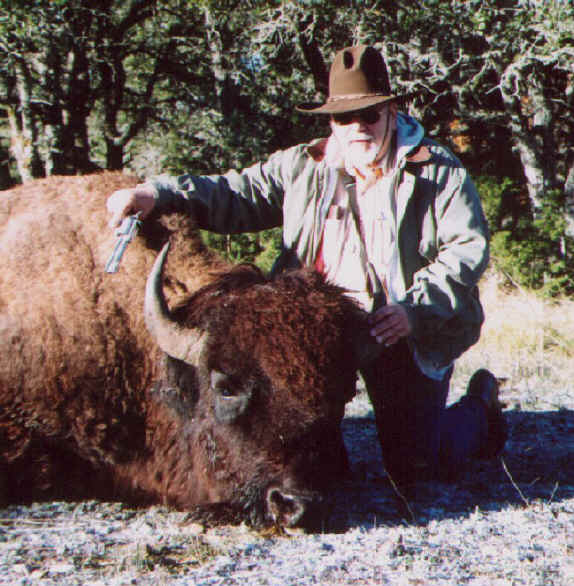
External publishers’ photographs and long passages were not copied into this page. Their work is summarized in original language and linked so the reader can visit the source. The Taffin photograph displayed here comes from the historical Sixguns.com archive itself. Short phrases closely associated with Taffin are used sparingly and in context.
Published sources do not agree on every numerical detail. For example, Taffin’s family obituary credits 10 books and more than 3,000 articles, while at least one later firearms-industry remembrance published a lower book count. This memorial uses the family obituary for that tally and leaves the source links visible rather than pretending the historical record is more uniform than it is.